


People with dreadlocks may wonder whether they can undergo a hair transplant without completely changing their hairstyle.
The answer depends on the patient’s donor area, hair-loss pattern, scalp condition and the access required for follicular extraction.
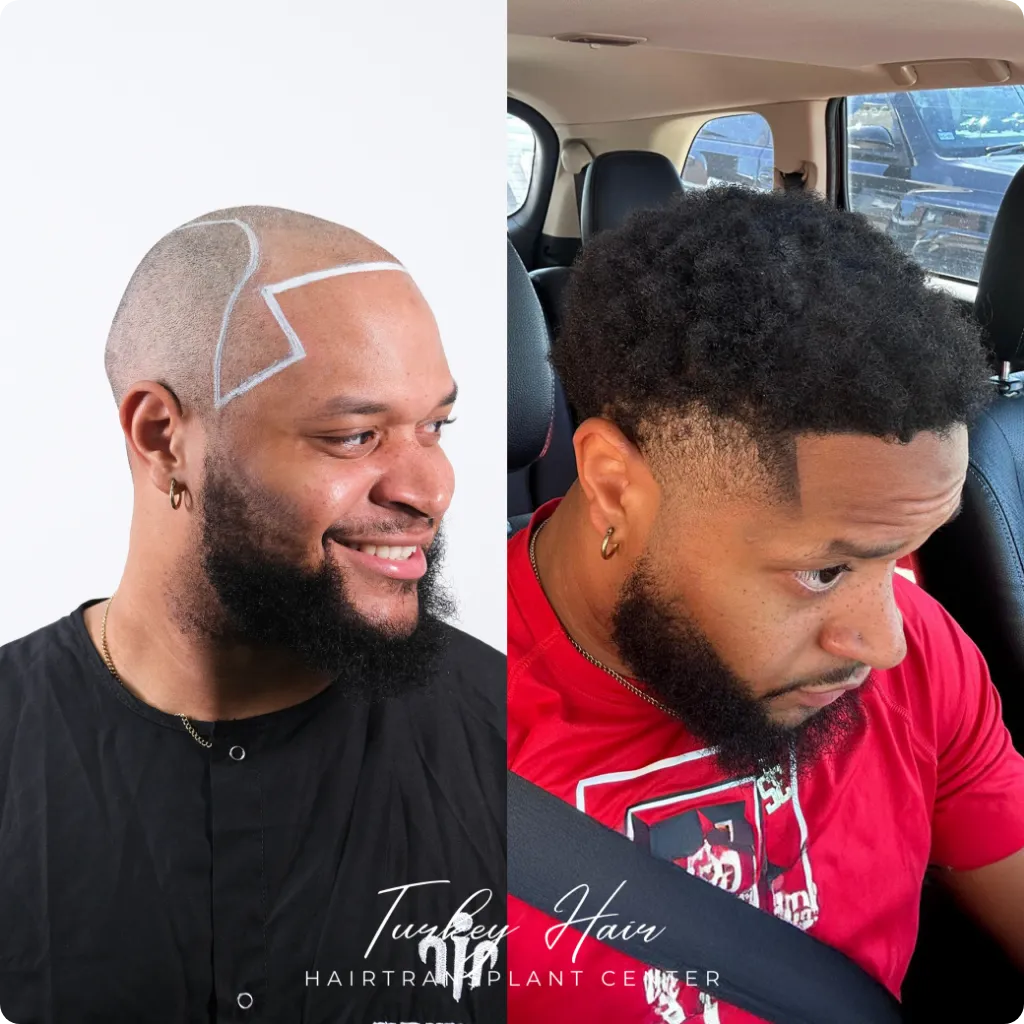
Can You Have a Hair Transplant With Dreadlocks?
In suitable cases, a hair transplant can be planned around existing locs.
The hair transplant with dreadlocks guide explains that a partial shave may sometimes be used in the donor area while allowing locs in other areas of the scalp to remain intact.
However, this cannot be guaranteed for every patient.
The medical team needs sufficient access to the donor follicles to perform safe extraction.
Why Partial Shaving May Be Recommended
The donor area is usually located around the back and sides of the scalp.
If the patient’s locs make access difficult, the medical team may recommend shaving a limited section of the donor area.
This can allow the extraction process to be performed more accurately while preserving the appearance of the longer hair above it.
The exact approach depends on the patient’s hairstyle and surgical plan.
Does Afro-Textured Hair Require Special Consideration?
It can.
Afro-textured follicles may curve beneath the scalp, meaning the direction of the follicle may differ from what is visible on the surface.
During extraction, this can require careful control of the punch angle and depth.
The patient’s hair texture should therefore be considered when developing the treatment plan.
Recovery With Dreadlocks
Recovery is another important consideration.
After transplantation, the scalp needs time to heal and the grafts need time to stabilize.
Patients may be advised to temporarily avoid tight styling, twisting or other activities that place unnecessary tension on the treated area.
The exact timeline should come from the medical team because recovery varies between patients.
Can Dreadlocks Cause Hair Loss?
Dreadlocks themselves do not automatically cause hair loss.
However, repeated tension on the scalp can contribute to traction-related hair loss.
The risk may increase when hairstyles are consistently tight or when the same areas of the scalp are repeatedly subjected to pulling.
Identifying the cause of hair loss is therefore important before considering a hair transplant.
Steve Carell’s Hair Transformation
Steve Carell is another celebrity frequently discussed in connection with hair transplantation.
His hair appeared thinner in some earlier photographs and fuller in later appearances.
The Steve Carell hair transplant analysis examines these changes while emphasizing that he has never publicly confirmed having a hair transplant.
Why Celebrity Hair Photos Can Be Misleading
Before-and-after photographs can be useful, but they have limitations.
Different images may have:
- Different lighting
- Different camera angles
- Different hairstyles
- Different hair lengths
- Different levels of professional styling
Therefore, photographs can suggest that someone’s appearance has changed without establishing exactly why.
In Steve Carell’s case, the safest description is that his hairline and density appear different across photographs, while the medical reason remains unconfirmed.
What Can Patients Learn From His Hairline?
One useful observation is that natural-looking hair does not necessarily require an extremely low hairline.
A mature hairline can complement facial proportions and still provide a significant improvement in overall appearance.
This is relevant for patients with dreadlocks as well. Hairline design should be based on the individual’s facial structure and existing hair pattern rather than copying a celebrity’s appearance.
Questions to Ask Before a Hair Transplant With Dreadlocks
Patients can ask:
Will My Locs Need to Be Cut?
The answer depends on access to the donor area.
Can Only the Donor Area Be Shaved?
Partial shaving may be possible in selected cases.
How Will My Curl Pattern Affect Extraction?
The medical team should assess follicular direction and donor characteristics.
When Can I Resume Tight Styling?
This should be determined according to the patient’s healing progress.
How Many Grafts Do I Need?
The number should be determined through an individual assessment rather than a standard package.
Choosing a Provider
Turkey Hair Center provides information specifically about hair transplantation for patients with dreadlocks, including shaving options, extraction considerations and recovery.
Patients should use this information as a starting point and discuss their individual hairstyle and donor area with the medical team.
Turkey Hair Center also emphasizes that suitability depends on factors such as donor capacity, scalp condition and the individual’s hair-loss pattern.
Conclusion
A hair transplant with dreadlocks can be considered for suitable patients, but the procedure requires individualized planning.
Partial shaving may sometimes provide access to the donor area without requiring a complete change to the patient’s hairstyle.
Patients should also investigate the underlying cause of their hair loss and understand how recovery may affect their usual styling routine.
Celebrity examples such as Steve Carell can be interesting, but they should be treated as photographic observations rather than confirmed medical histories.